 14174 Trustpilot Reviews
 Free Shipping Over $79


Does Stainless Steel Jewelry Tarnish? (The Truth About Water, Wear, and Fakes)
If you are shopping for low-maintenance jewelry or wondering why a piece you already own is changing color, here is the short answer:
Pure, high-grade stainless steel (specifically 316L Surgical Steel) will NOT tarnish, rust, or turn your skin green under normal daily wear—even in water. However, if your jewelry is turning bronze or pinkish-copper, you likely bought a low-quality alloy with a thin plated coating, rather than solid stainless steel.
Below, we break down the science behind stainless steel, address daily wear scenarios (showering, sweating, swimming), and reveal why some "stainless steel" pieces ruin after a few months while others last a lifetime.
1. Why Genuine Stainless Steel Doesn’t Tarnish
To understand why stainless steel is so durable, it helps to compare it with other metals like sterling silver or copper.
Silver tarnishes because it reacts with sulfur particles in the air, creating a dark layer of silver sulfide. Standard iron rusts when exposed to oxygen and moisture.
Stainless steel behaves differently due to an element called Chromium. High-quality stainless steel contains at least 10.5% chromium. When exposed to oxygen, chromium instantly forms an invisible, ultra-thin protective film on the surface known as Chromium Oxide.
• Self-Healing Shield: If you scratch your stainless steel ring or necklace, this chromium oxide layer seals itself back up instantly when exposed to air.
• Corrosion Resistance: Moisture, sweat, and air cannot penetrate this barrier, preventing oxidation, rust, and discoloration.
The Metal Grade Matters: 316L vs. 304
Not all stainless steel is created equal. Most reputable jewelry brands use 316L Stainless Steel (often referred to as surgical-grade steel). 316L contains an extra element called Molybdenum, which significantly increases its resistance to harsh chlorides, salt water, and human sweat compared to cheaper grades like 304.
2. Real-World Wear: Can You Wear It 24/7?
One of the biggest reasons people choose stainless steel is convenience. You don't want to spend five minutes removing every ring and chain before taking a shower or heading to the gym.
Can you wear a stainless steel necklace in the shower or ocean?
• Freshwater & Showers: Yes, absolutely. Pure stainless steel will not react with clean water, soap, or body wash.
• Ocean Saltwater: 316L steel resists salt corrosion very well. However, after swimming in the sea, it’s good practice to rinse your jewelry under tap water to remove dried salt deposits that might dull its shine over time.
• Chlorinated Swimming Pools: Chlorine is a strong chemical. While brief exposure won't immediately destroy stainless steel, prolonged immersion in heavy pool chemicals can weaken the protective chromium layer. A quick freshwater rinse afterward keeps it in pristine condition.
Will it turn your skin green?
No. Skin turns green when jewelry releases copper or nickel ions that react with the natural acids in your sweat. Solid 316L surgical steel is hypoallergenic, non-reactive, and will not leave green or dark marks on your skin.
3. The "Pink/Copper Backside" Mystery: Did You Buy Fake Stainless Steel?
A very common problem reported by consumers goes like this:
"The front of my necklace looks fine, but the backside—the side touching my skin—turned a pinkish-copper color. Did my stainless steel tarnish?"
If this happened to you, you did not purchase solid stainless steel.
Here is what actually happened:
• Base Metal Plating: To save costs, some manufacturers produce jewelry out of cheap brass, copper, or zinc alloys, and then apply an ultra-thin "stainless steel look" electroplated layer over the top.
• Friction + Acid: The side of the jewelry resting against your neck or chest endures constant friction from movement, combined with the natural acidity of skin oils and sweat.
• The Plating Wears Off: Over a few weeks or months, the outer silver coating rubs off completely, exposing the base metal beneath—which is red or pinkish copper.
Solid vs. Plated Stainless Steel
When buying jewelry, check the product specifications carefully:
• Solid 316L Stainless Steel: The metal is uniform all the way through. It cannot rub off because there is no outer coating to wear away.
• Stainless Steel Plated / Base Metal: Avoid pieces where stainless steel is only listed as a "coating" over an unspecified base metal.
4. Does Gold-Plated Stainless Steel Fade?
If silver-tone stainless steel doesn't tarnish, what about gold stainless steel?
Natural gold doesn't tarnish, but stainless steel isn't naturally yellow. To create gold stainless steel jewelry, manufacturers apply a layer of gold over the steel base.
How long that gold finish lasts depends on the coating technology:
Coating Type | Process | Durability / Lifespan |
Traditional Electroplating | Thin layer of gold dipped onto the surface | Wears off in 3–6 months with frequent wear. |
PVD Vacuum Coating (Physical Vapor Deposition) | Gold vapor bound to the steel at a atomic level inside a vacuum chamber | Highly durable. Resists fading for 1 to 3+ years of regular wear. |
If you want yellow or rose gold jewelry that holds up to daily water and sweat, always look for PVD Gold-Coated 316L Stainless Steel.
5. How to Care for Daily Wear Items (Like Cuban Link Chains)
Because solid stainless steel is low-maintenance, caring for it is simple. However, heavy or intricately woven pieces can catch everyday grime.
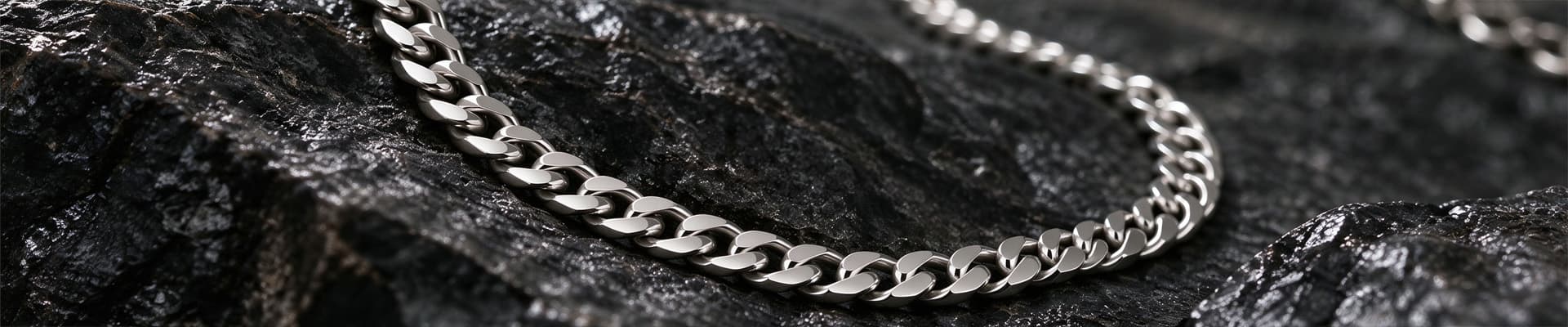
For instance, sturdy classics like a stainless steel Cuban link chain are built to endure daily wear, gym sessions, and showers without tarnishing. But because Cuban links feature closely interlocking geometric patterns, soap scum, dead skin, and natural sweat can slowly build up inside the crevices over time, making the chain look dull.
Simple 3-Step Cleaning Method:
• Soak: Fill a bowl with warm water and add 2–3 drops of mild liquid dish soap. Let your jewelry sit in the water for 5–10 minutes.
• Gently Brush: Use a soft-bristled toothbrush to clean inside tight links or around clasp mechanisms.
• Rinse & Dry: Rinse thoroughly under lukewarm running water to remove all soap residue, then dry completely with a microfiber cloth.
6. Checklist: What to Look For Before You Buy
To ensure your stainless steel jewelry truly lasts without turning color or irritating your skin, keep this checklist in mind when shopping:
√ Confirm 316L Grade: Look for "316L Surgical Steel" in the product description rather than generic "metal" or "stainless alloy."
√ Verify "Solid" Construction: Make sure the core material is solid stainless steel, not electroplated brass or copper.
√ Check Gold Process: If buying gold-tone pieces, verify that the brand uses PVD coating or real gold PVD plating.
√ Look for Hypoallergenic Guarantees: Reputable retailers will explicitly state that their pieces are nickel-free and lead-free.
By choosing genuine 316L surgical steel, you get pieces that look great, survive daily life, and require virtually zero effort to maintain.