 14174 Trustpilot Reviews
 Free Shipping Over $79


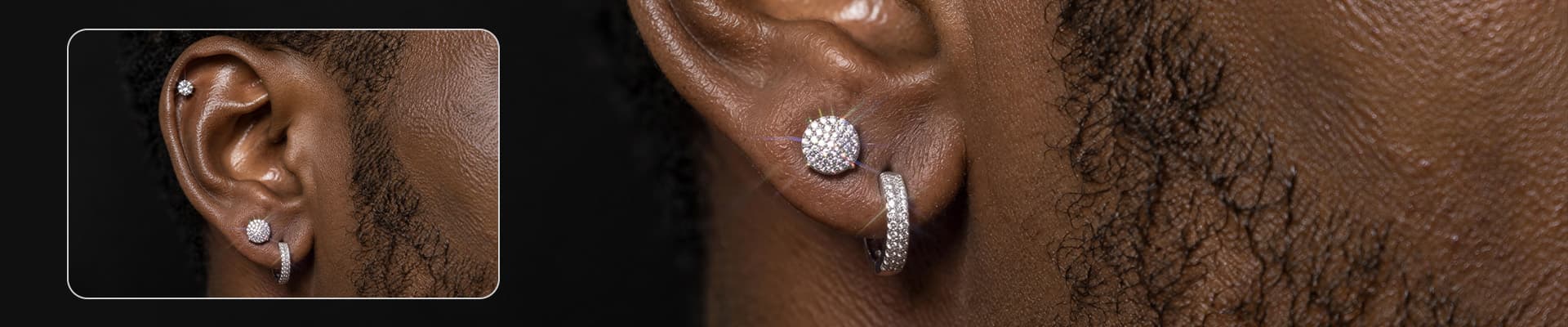
Ear Piercing for Guys: Everything You Need to Know
If you are a guy thinking about getting your ears pierced, take a deep breath and relax: getting an ear piercing is a remarkably simple, common, and mainstream grooming choice today. For many men considering their first piercing, the hesitation rarely stems from physical pain—it comes from mindset: "Will it look strange on a guy?" or "Will it affect my professional image?"
The short answer: No, it won't look strange. Men’s ear jewelry has evolved far beyond old stereotypes. Modern men from all walks of life—athletes, creative professionals, and style enthusiasts alike—embrace piercings as a subtle yet powerful way to elevate their personal style. Whether you want to add a single classic stud or explore a more curated look, getting a piercing is quick, safe, and easily reversible, making it one of the most accessible forms of self-expression.
The Core and Most Common Men’s Ear Piercing Locations
When planning your look, it helps to understand the anatomy of the ear and the most popular placement options available for men.
Ear Lobe Piercing for Men
The standard ear lobe piercing is by far the most popular and classic choice for beginners. Earlobes consist of soft tissue with good blood flow, making the piercing process relatively painless and recovery smooth. It accommodates both daily studs and sleek hoops once healed.
Variations: A single lobe piercing on one or both sides is timeless, while a stacked lobe (two or three piercings aligned vertically) offers a modern, edgy twist without venturing into heavy cartilage work.
Expanding Your Style with Dangle Earrings: Once your standard lobe or cartilage piercing is fully healed, you aren't limited to basic studs. Modern men's fashion heavily features dangle earrings (drop earrings featuring small crosses, bars, or lightweight charms). They introduce dynamic movement and a bold, rock-infused aesthetic when paired with a simple t-shirt or a sharp leather jacket.
Helix and Upper Cartilage Piercing
Located along the upper rim of the ear, Helix piercings offer a bolder, edgy look. Because cartilage lacks direct blood circulation, it feels slightly more sensitive and requires a longer healing commitment. It is a favorite for men looking to transition from basic studs to stylish small metal hoops.
Advanced Placement (Conch, Tragus, and More)
Ideal for those who want to build a curated ear stack:
• Conch: The inner cup of the ear, providing a striking focal point.
• Tragus: The small cartilage flap right in front of your ear canal. These positions require precise positioning by a professional piercer and work exceptionally well with small, snug labret studs or seamless clicker rings.
What Does It Actually Feel Like? (Pain & Real Community Insights)
Pain is usually the top concern, but real-world feedback shows the actual procedure is much lighter than expected.
💬 Insights & Feedback from Real Male Piercing Experiences:
The Piercing Moment: Getting pierced is a quick and surprisingly fun experience. The needle/piercing action feels like a short, dry "plopp"—barely noticeable—and suddenly the stud is in place. Getting your first pair often feels like an exciting rite of passage into a new level of personal style.
Wearing Studs Daily: Once fitted with starter studs, you hardly feel them after the first few days. They quickly become a natural extension of your body.
Switching to Hoops & Tactile Magic: Once healed, switching to hoops introduces a unique sensation: feeling the metal shift as you turn your head, or hearing a faint, satisfying click when multiple hoops touch. It’s a subtle, tactile detail non-wearers can't imagine—and one you'll subconsciously play with all day.
The Universal "Mirror Battle" & Subtle Joys: Almost every guy encounters the hilarious "mirror battle" when swapping standard studs for hoops for the first time. Trying to clip a tiny hinge behind your ear while staring into the mirror can easily take 10 frustrating minutes—it’s a rite of passage every wearer understands!
Pain Levels and Healing Timelines Reference
Piercing Location | Typical Pain Level | Healing Timeline | Description & Maintenance |
Standard Lobe | Low (1-2/10) | 6 – 8 weeks | Soft flesh tissue, fastest recovery, ideal first choice. |
Stacked Lobe | Low to Moderate (2-3/10) | 6 – 10 weeks | Vertical alignment on the lobe; easy to manage. |
Helix / Cartilage | Moderate (4-5/10) | 3 – 9 months | Upper rim cartilage; requires patience and strict aftercare. |
Conch / Tragus | Moderate to High (5-6/10) | 4 – 9 months | Thick cartilage zones; sensitive during initial weeks. |
Left Ear vs. Right Ear: Which Side Should Guys Choose?
A common question for first-timers is whether there is a rule or hidden meaning behind choosing the left or right ear.
Historically, cultural and generational myths surrounded which ear a man should pierce (such as old folklore about the left or right side indicating sexual orientation). Today, those rules are entirely obsolete. In modern fashion and daily life, there is no strict rule or social implication.
How to choose your side:
• Personal Preference & Hairstyle: Check which side of your face is more visible, or which side you sleep on less often (to avoid pressing on a fresh piercing).
• Asymmetry or Balance: Many modern men choose a single piercing on one side to create an asymmetric, edgy look, while others go for symmetry with both ears pierced. Choose whichever side feels most natural to you!
• Single vs. Double Piercings: How to Pick Your Style
Single Ear: Subtle and versatile. A single stud on one side adds an understated, edgy accent that seamlessly integrates into casual or smart-casual outfits, making it a popular low-key entry point for beginners.
Both Ears (Double): Delivers visual symmetry and a stronger, balanced style statement. Going for a symmetrical pair of men's stud earrings — such as minimalist titanium or black geometric studs—is a classic choice that anchors your overall look, widely favored in streetwear and modern fashion.
Healing Period & Essential Aftercare
A smooth healing phase relies on consistent, gentle care. Avoid common mistakes that lead to irritation:
• Do Not Remove Jewelry Early: Keep starter jewelry in for at least 6–8 weeks for lobes (and months for cartilage). Removing earrings too soon can cause the hole to shrink or close rapidly.
• Ditch Harsh Chemicals: Avoid rubbing alcohol or hydrogen peroxide—they burn away healthy new skin tissue. Instead, clean the area twice daily with a sterile saline spray.
• Minimize Touching: Resist twisting or touching your earrings with unwashed hands, as bacteria transfer is the primary cause of infection.
• Sleeping & Routine: Avoid sleeping directly on new piercings. After showering or swimming, gently pat the area dry with clean paper towels.
Special Care for Sensitive Skin & Jewelry Selection
If you have sensitive skin or a history of allergic reactions to metals (such as cheap alloys that cause itching, redness, or swelling), material matters: Hypoallergenic is key.
• Implant-Grade Titanium (ASTM F-136): The gold standard. Lightweight, nickel-free, and ideal for sensitive skin.
• Surgical Stainless Steel (316L): A durable, budget-friendly classic for healed or non-sensitive piercings.
• 14K / 18K Solid Gold: Excellent for premium styling, provided it contains no nickel alloys.
What If Your Skin Just Isn’t Suited for Piercings?
Some guys love the look of classic men's stud earrings or edgy dangles, but find that their skin is too sensitive, their workplace has strict no-piercing policies, or they simply don't want to deal with the commitment of needles and healing.
If you fall into this category, magnetic earrings men are a fantastic, risk-free alternative. They use strong, safe magnetic backs to hold stylish studs securely in place on your earlobe without any actual piercing. It allows you to test-drive different styles, rock a bold look for the weekend, or enjoy the aesthetic effortlessly without breaking the skin barrier.
FAQs
Q: Does piercing the left or right ear carry specific meanings for men?
A: Not anymore. Back in the 1980s and 90s, urban legends assigned arbitrary subcultural meanings to left vs. right ear piercings. Today, those myths are completely dead in modern fashion. Placement is strictly about symmetry, personal aesthetic, and whichever side of your face you think looks best.
Q: When can I safely change my starter earrings?
A: Wait at least 6 to 8 weeks for lobes, ensuring there is no redness, swelling, or tenderness. For cartilage piercings, wait at least 3 to 6 months before swapping jewelry.